

Frontiers In Finance Conference will be held from July 3 to July 4, 2025, at the University of Science and Technology of China. The conference aims to bring together alumni active in finance, support the finance discipline at USTC, and promote the dialogue among academia, industry practitioners, and regulators.
The conference is organized by USTC Alumni Network and School of Management / Faculty of Business for Science and Technology / International Institute of Finance, USTC.
Program
Call for Papers
We invite alumni, faculty, and ex-faculty of USTC to submit academic papers on finance related topics. Manuscripts written in both Chinese and English are welcome.
Invited Speakers

XIONG Wei is John H. Scully ’66 Professor in Finance and Professor of Economics in the Department of Economics and Bendheim Center for Finance, Princeton University.
Prof. Xiong holds a BS in Physics from University of Science and Technology of China, an MA in Physics from Columbia University, and a PhD in Finance from Duke University.
His research focuses on capital market imperfections and behavioral finance, with a particular emphasis on speculative bubbles, asset pricing with heterogeneous beliefs, asset market contagion, limited investor attention, nonstandard investor preferences, rollover risk and other financing frictions faced by firms. His current research interests focus on financialization of commodity markets, belief distortions in the recent financial crisis, and China’s financial markets.
Prof. Xiong has published extensively in top academic journals, including Management Science, The Journal of Finance, Journal of Financial Economics, Review of Financial Studies and Journal of Econometrics, etc. He has received a range of prestigious awards, including the Smith Breeden Award for the best non-corporate finance paper, the NASDAQ OMX Award for the best asset pricing paper, China Economics Prize, and Elected Fellow of the Econometric Society.
In addition to his research, Prof. Xiong has held prominent editorial positions for top-tier journals, including serving as the Co-Editor of The Journal of Finance, Finance Department Editor and Associate Editor of Management Science, and Associate Editor of Review of Finance.
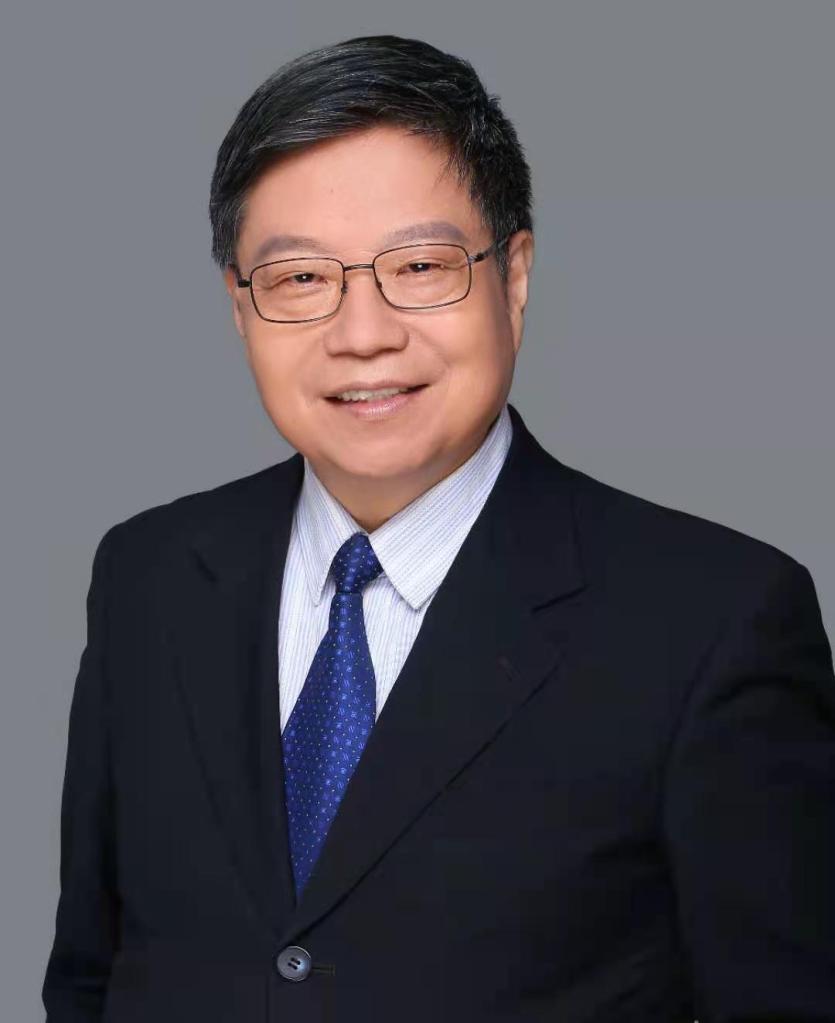
WANG Shouyang is a Professor at University of Chinese Academy of Sciences.
Prof. Wang holds a BS from Sun Yat-sen University, and an MA and a PhD from Institute of Systems Science, Chines Academy of Science.

YAN Hong is the Chair Professor of Finance at Shanghai Advanced Institute of Finance, Shanghai Jiao Tong University, where he serves as the Deputy Dean of Academic Affairs and Faculty, the Academic Director of the Global Executive Scholars Program (GES), and the Director of China Hedge Fund Research Center and Center for Sustainable Investment.
Prof. Yan holds a BS in Physics from University of Science and Technology of China, a PhD in Applied Physics from the University of Michigan, and a PhD in Finance from the University of California, Berkeley.
Before he joined SAIF full-time, Prof. Yan was a tenured faculty member at the Darla Moore School of Business in the University of South Carolina, USA. Previously, he was on the faculty at the University of Texas at Austin and spent a year as a visiting academic scholar at the U.S. Securities & Exchange Commission (SEC). He also held visiting appointments at the University of Hong Kong, the U.S. Federal Reserve Board and Cheung Kong Graduate School of Business.
His research focuses on the areas of credit risk, asset pricing, derivatives securities, and investment management. He also studies financial intermediaries such as mutual funds, hedge funds and financial analysts. Prof. Yan has published in top academic journals such as Journal of Finance, Journal of Financial Economics, and Review of Financial Studies. His research has been recognized by a Q-group Grant in 2007, the Crowell Prize in Investment Management in 2010 and a number of Best Paper Awards at international academic conferences.
Professor Yan served from 2012 to 2018 as a Managing Editor of the International Review of Finance, the journal for the Asian Finance Association and the Nippon Finance Association. He chaired the program committee for the China International Conference in Finance (CICF) in 2013 and 2014, and has served on program committees for several major international conferences. He reviews manuscripts for more than twenty internationally renowned academic journals in economics and finance. In addition, he sits on the advisory boards of several academic and financial institutions.

YU Jianfeng is the Jianshu Chair Professor of Finance, Director of Research Center for Asset Management, and the Vice Chair of Tsinghua Fintech Research Institute at PBC School of Finance, Tsinghua University.
Prof. Yu holds a BS in Probability and Statistics from University of Science and Technology of China, an MA in Statistics from Yale University, and a PhD in Finance from the Wharton School of Business, University of Pennsylvania.
Before joining PBC School of Finance, Yu was a Piper Jaffray Professor in Finance at the Carlson School of Management, University of Minnesota. He conducts both theoretical and empirical research on behavioral finance and macro finance. His research is published in academic journals such as American Economic Review, Journal of Finance, Journal of Financial Economics, Journal of Monetary Economics, Management Science, Review of Economic Dynamics, and Review of Financial Studies.
His research has won various awards including the Smith-Breeden First Prize, Chicago Quantitative Alliance Academic Competition First Prize, Inaugural AQR Insight Award (honorable mention), Crowell Memorial Prize (Third Prize) from PanAgora Asset Management, and the Institute for Quantitative Research in Finance (Q-Group) Research Award.
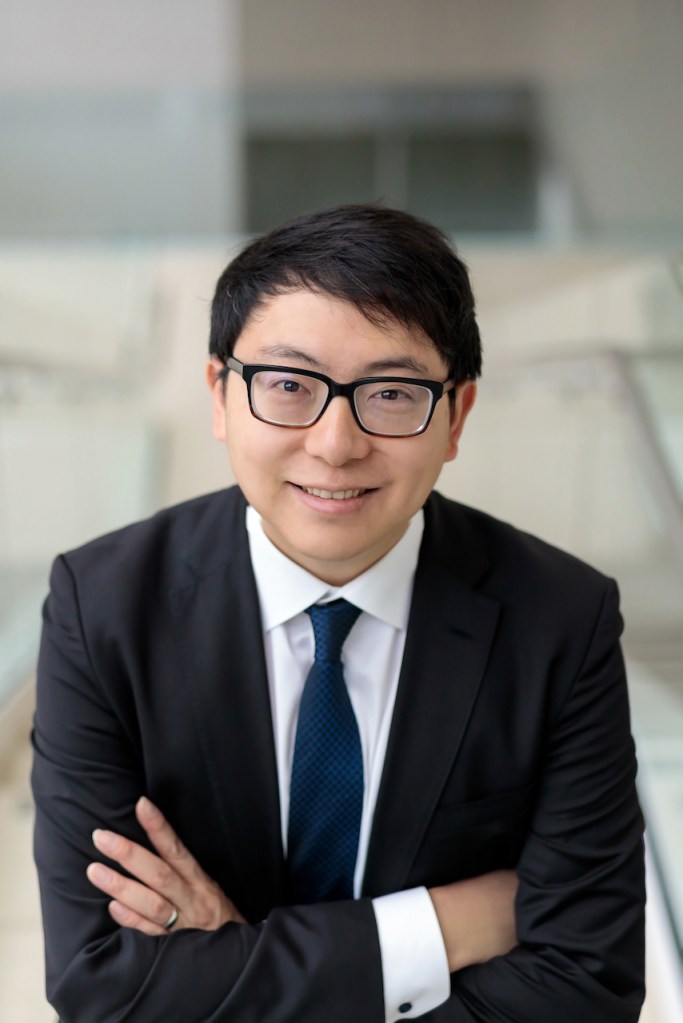
XIU Dacheng is the Joseph Sondheimer Professor of Econometrics and Statistics, Booth School of Business.
Prof. Xiu holds a BS in Mathematics from University of Science and Technology of China, an MA and a PhD in Applied Mathematics from Princeton University.
Xiu serves as a Research Associate at the National Bureau of Economic Research. He currently holds and has previously held several editorial positions, including Co-Editor of Journal of Business & Economic Statistics and Journal of Financial Econometrics, as well as Associate Editor for journals such as Journal of Finance, Review of Financial Studies, Journal of the American Statistical Association, Management Science, and Journal of Econometrics.
He has received several recognitions for his research, including Fellow of the Society for Financial Econometrics, Fellow of the Journal of Econometrics, Swiss Finance Institute Outstanding Paper Award, AQR Insight Award, Dimensional Fund Advisors Prize, Bates-White Prize, and best paper prizes at various conferences. He has been recognized as one of Poets & Quants’ Best 40-under-40 Business School Professors.

PENG Lin is the Krell Chair Professor of Finance of Zicklin School of Business, Baruch College / City University of New York.
Prof. Peng holds a BS in Biology from University of Science and Technology of China, an MA in Biology from Wesleyan University, and a PhD in Finance from the Fuqua School of Business, Duke University.
Prof. Peng is an associate editor for Management Science and the Journal of Empirical Finance. She is a visiting scholar at Princeton University and serves on the management committee for the Keynes Fund at the University of Cambridge. Her research spans social networks, FinTech, AI, and sustainable finance. Her work has published in leading academic journals and her insights have been featured in The Wall Street Journal, Financial Times, Washington Post, Newsweek, Reuters, among others.
In recognition of her impact on business and society, she was named a 2024 Influential Leader by the Association to Advance Collegiate Schools of Business (AACSB). Her work has received support from the United Nations Principals of Responsible Investments and the Keynes Fund and has been recognized with multiple Best Paper Awards. Her work has been presented at global regulatory agencies such as the U.S. Securities and Exchange Commission, Federal Reserve Bank’s Board of Governors, European Securities and Markets Authority, Bank of England, and leading global universities and conferences.
 Frontiers In Finance Conference